You just got your first salary. ₹60,000. Your expenses are ₹25,000. You have ₹35,000 left. How would you spend that money? Buy the bike you've been eyeing? Upgrade your phone? Take your friends to Goa? Help your parents? Or would you rather start investing?
There is no "correct answer" sitting at the back of the book. You have to decide. And then live with what happens next.
Pehli salary aayi hai. ₹60,000. Expenses ho gaye ₹25,000. Ab bache ₹35,000. Yeh paisa kaise kharch karoge? Bike le lo? Phone upgrade kar lo? Friends ke saath Goa nikal jao? Parents ko paise de do? Ya phir invest karna shuru karoge?
Koi answer book ke last page pe nahi diya hai. Decision aapko lena hai. Aur uske baad jo hoga... woh bhi handle aapko hi karna hai.
START YOUR LIFE APNI LIFE SHURU KAROIf you're expecting shooting, racing or fighting... well, Munimji has bad news. This game has something much more dangerous. Life. Salary. EMIs. Parents. Love. Marriage. Career. Festivals. Hospitals. Markets. Businesses. Unexpected expenses.
You don't defeat life. You learn to handle it.
Agar aap shooting, racing ya fighting game dhoondh rahe ho... toh Munimji ke paas ek chhoti si khabar hai. Yahan kuchh zyada dangerous hai. Life. Salary. EMI. Parents. Love. Marriage. Career. Festivals. Hospital. Market. Business. Achanak ka kharcha.
Life ko haraana nahi hai. Life ko handle karna hai.
Nobody learns swimming from a book. You get into the water, again and again, until your body knows what to do. Money works the same way. Even after an MBA from a top B-school, most people never build the habits: when to save, where to invest, when to exit, which advice to ignore.
Indian Dream is the practice. You decide month after month, year after year, and the habits form on their own, without you noticing. Then one day you walk into a bank, see a hoarding or a TV ad, and Mutual Funds, Bonds and PPF are no longer a different world. You already know them.
Tairna kitaab padh kar koi nahi seekhta. Paani mein utarna padta hai, baar baar, jab tak body khud samajh na jaaye. Paise ke saath bhi yahi hai. Bade B-school se MBA karne ke baad bhi zyada tar logon mein yeh habits nahi banti: kab bachana hai, kahan lagana hai, kab nikalna hai, kiski salah nahi sunni.
Indian Dream wahi practice hai. Mahine dar mahine, saal dar saal aap decision lete ho, aur habits apne aap ban jaati hain, pata bhi nahi chalta. Phir ek din aap bank jaate ho, koi hoarding ya TV ad dekhte ho, aur Mutual Funds, Bonds, PPF koi alag duniya nahi lagte. Aap unhe pehle se jaante ho.
Practise here. Every mistake is free, and you can play again.
Yahan practice karo. Har galti free hai, aur dobara khel sakte ho.
Your first salary, first SIP, first insurance. You have done it before.
Pehli salary, pehli SIP, pehla insurance. Yeh sab aap pehle kar chuke ho.
Market crashes, marriage, kids, home, retirement. You stay calm and decide.
Market crash, shaadi, bachche, ghar, retirement. Aap shaant rehkar decide karte ho.
Just when you think you've got things under control... life arrives with another plan. Your mother needs money. Diwali is around the corner. Your appraisal is due. Your bike breaks down. Someone gets hospitalized. A friend has an investment "opportunity." The market suddenly falls. And somehow, all of it happens in the same month.
Jab lagta hai sab control mein aa gaya... tabhi life bolti hai: "Achha? Ab meri suno." Mummy ko paise chahiye. Diwali aa gayi. Appraisal ka wait hai. Bike kharab ho gayi. Hospital ka kharcha aa gaya. Kisi ne investment ka "solid chance" diya hai. Aur market bhi gir gaya. Aur haan... sab ek hi month mein ho sakta hai.
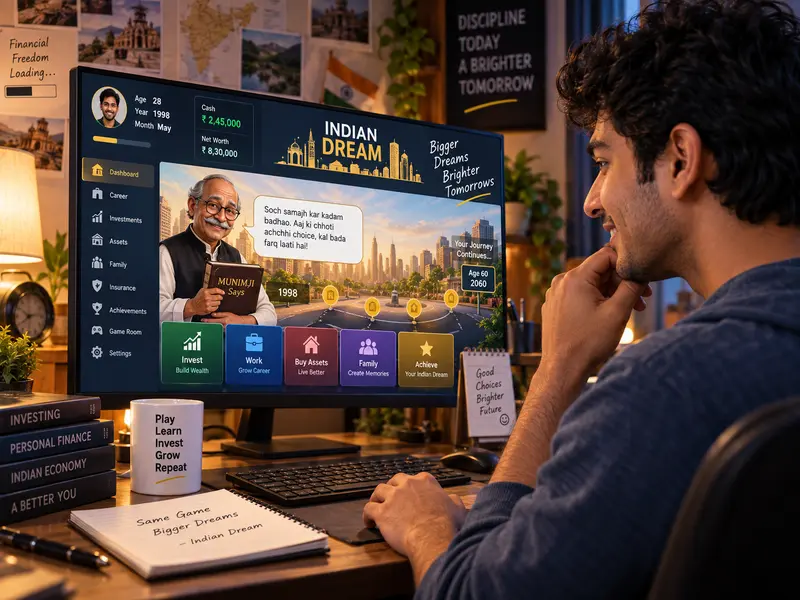
Indian Dream is a life simulation game. You start at 21, with your first job and your first salary. Then you live. Month after month. Year after year. You make choices. Life responds. Your money changes. Your investments change. Your career changes. Your relationships change. And eventually, you reach 60.
You are not following someone else's story. You're writing your own.
Indian Dream ek life simulation game hai. Aap start karte ho 21 ki age mein, first job aur first salary ke saath. Phir life chalti hai. Month after month. Year after year. Aap decisions lete ho. Life react karti hai. Paisa badalta hai. Investments badalte hain. Career badalta hai. Rishte badalte hain. Aur dheere-dheere aap 60 ki age tak pahunchte ho.
Kisi aur ki story nahi. Apni story.
Every month, you spin the Destiny Wheel. Something happens. Then the Fate Wheel decides how that situation unfolds. And now comes the interesting part: what will you do? Spend? Save? Invest? Borrow? Protect? Take the risk?
There is no perfect life. There are only decisions... and what follows them.
Har month Destiny Wheel ghoomega. Kuchh na kuchh saamne aayega. Phir Fate Wheel batayega ki situation kis direction mein jaayegi. Aur phir asli game shuru: Aap kya karoge? Spend? Save? Invest? Loan loge? Insurance loge? Risk loge?
Perfect life kisi ki nahi hoti. Decisions sab lete hain. Farq bas itna hai ki decision ke baad kya hota hai.
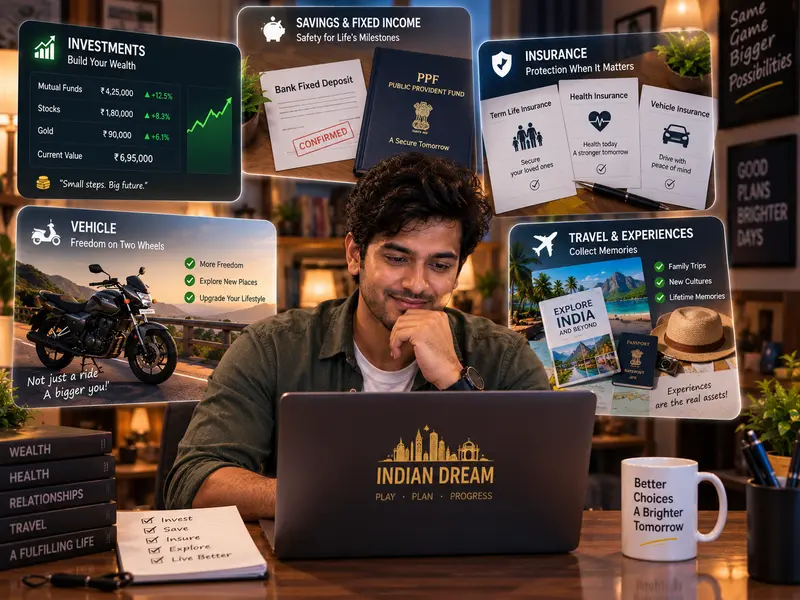
What do you do with the money left after your expenses? A new phone? A bike? A holiday? Or do you invest — stocks, mutual funds, SIP, FD, PPF, bonds, insurance? Then come the bigger questions. How much? For how long? When do you exit? And what happens when the market doesn't do what you expected?
Indian Dream lets you experience the consequences, instead of simply reading about them.
Expenses ke baad jo paisa bachta hai, uska kya karoge? Naya phone? Bike? Vacation? Ya invest karoge — Stocks, Mutual Funds, SIP, FD, PPF, Bonds, Insurance? Phir asli questions aate hain. Kitna invest karein? Kitne time ke liye? Kab nikaalein? Aur jab market aapki marzi ke hisaab se na chale toh?
Indian Dream mein sirf padhoge nahi. Khud karke dekhoge.
One person puts ₹10,000 every month into a traditional policy that grows about 6% a year. Another puts the same ₹10,000 into a portfolio they understand and manage, which grows about 16% a year. Same effort. Same salary. Different knowledge.
Ek insaan har mahine ₹10,000 ek traditional policy mein daalta hai, jo saal ka lagbhag 6% badhti hai. Doosra wahi ₹10,000 ek aise portfolio mein lagata hai jise woh samajhta hai aur khud manage karta hai, aur woh saal ka lagbhag 16% badhta hai. Mehnat wahi. Salary wahi. Bas samajh alag.
In Indian Dream you make that decision, watch 30 years of results in days, and know which one you want before your real money is on the line.
Indian Dream mein aap yeh decision lete ho, 30 saal ka result kuch hi dinon mein dekh lete ho, aur asli paisa lagane se pehle hi jaan jaate ho ki aapko kaunsa raasta chahiye.
This is how most people invest: put the money in and forget it. Five months later it is up 30%, but nobody books the profit. Nine months later only 5% is left. At fifteen months it is 20% below where you started, and you freeze. Parking your money and praying is not long-term investing. It is gambling.
In Indian Dream the markets go through real booms and crashes. You read candlestick charts, decide when to enter, how much to put in, when to book profit and when to buy more, and you see what each choice does. That is how you stay in control.
Zyada tar log aise hi invest karte hain: paisa daalo aur bhool jao. Paanch mahine mein 30% upar, par profit koi book nahi karta. Nau mahine baad sirf 5% bacha. Pandrah mahine pe entry se 20% neeche, aur aap freeze ho jaate ho. Paisa daal ke bas dua karna long-term investing nahi hai. Yeh jua hai.
Indian Dream mein market mein asli jaisi tezi aur mandi aati hai. Aap candlestick charts padhte ho, decide karte ho kab ghusna hai, kitna lagana hai, kab profit book karna hai aur kab aur khareedna hai, aur har choice ka nateeja dekhte ho. Isi tarah aap control mein rehte ho.
Papa's friend has a "guaranteed" policy. Mama ji knows a plan. A colleague has a hot stock tip. A relative is starting a business and needs a partner. In real life they all sound sure of themselves, and you rarely find out which advice was bad until years later.
In Indian Dream the same pitches come to you, good ones and bad ones. You choose, live with the result, and learn to spot the difference before your real money is on the table.
Papa ke dost ke paas "guaranteed" policy hai. Mama ji ke paas ek plan hai. Colleague ke paas stock ka garam tip hai. Koi rishtedaar business shuru kar raha hai aur partner dhoondh raha hai. Asli life mein sab bade confident lagte hain, aur kaunsi salah buri thi yeh aksar saalon baad pata chalta hai.
Indian Dream mein yahi pitch aapke paas aate hain, achhe bhi aur bure bhi. Aap choose karte ho, nateeja jhelte ho, aur asli paisa lagane se pehle farq pehchanna seekh jaate ho.
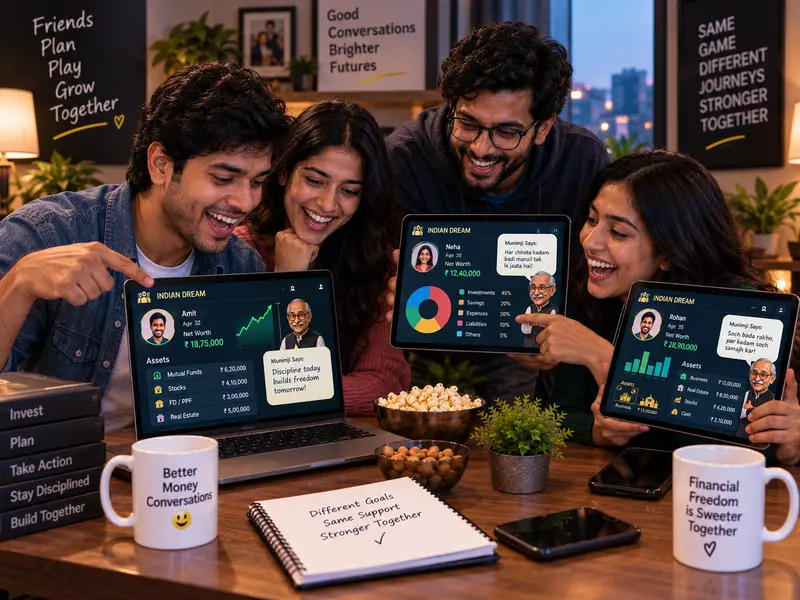
Create a room. Invite your friends, cousins or family. Everyone plays their own life. You can chat, react, send voice messages, and watch each other's progress. When Rahul buys a bike... everyone knows. When Priya's investments take off... everyone notices.
Because life is more fun when there are people around to celebrate it, question it, laugh about it — and learn from it.
Room banao. Friends, cousins ya family ko bulao. Sab apni-apni life play karo. Chat karo, react karo, voice messages bhejo, ek doosre ka progress dekho. Rahul ne bike li... sabko pata chalega. Priya ke investments chal pade... sab dekhenge.
Kyunki life tab aur mazedaar ho jaati hai jab saath mein log ho — celebrate karne ke liye, chhedne ke liye... aur ek doosre se seekhne ke liye.
PLAY WITH FRIENDS DOSTON KE SAATH KHELOMaybe your friend invested early. Maybe your cousin bought the bike. Maybe someone ignored insurance. Maybe someone took a business risk that worked brilliantly. Maybe it didn't. In Indian Dream, you get to see how different choices shape different lives.
You don't have to make every mistake yourself.
Ho sakta hai aapke friend ne early invest kiya. Cousin ne bike le li. Kisi ne insurance ignore kar diya. Kisi ne business mein risk liya — aur kamaal kar diya. Ya phir... sab ulta ho gaya. Indian Dream mein aap doosron ke decisions aur unke outcomes bhi dekh sakte ho.
Har mistake khud karna zaroori nahi hota.
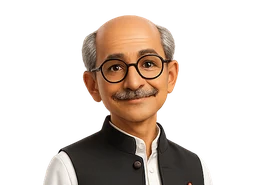
Before a big decision, Munimji explains what it means. After it, he tells you how it went. Every salary, expense, investment, EMI, asset, business decision, act of generosity and mistake is recorded in his Ledger. Every March he hands you an Annual Report with your tax, and the Bharat Bulletin newspaper comes with his tip on what the economy is doing.
Bade decision se pehle Munimji samjhaate hain ki iska matlab kya hai. Decision ke baad batate hain ki kaisa raha. Har salary, kharcha, investment, EMI, asset, business decision, seva aur galti unke Ledger mein darj hoti hai. Har March woh aapko tax ke saath Annual Report dete hain, aur Bharat Bulletin akhbaar ke saath unka tip aata hai ki economy kis taraf ja rahi hai.
It's all there in your Ledger, so you can see exactly where your life is heading.
And when things go wrong? Don't panic. A bad month isn't a bad life. A market crash isn't the end. A mistake isn't the end of the story.
Life is not one spin. It's the next spin. And the next one. And the next.
Sab kuchh Ledger mein hai, taaki aap saaf dekh sako ki aapki life kis taraf ja rahi hai.
Aur jab kuchh galat ho jaaye? Panic nahi. Ek bura month, buri life nahi hoti. Market crash hua? Story khatam nahi. Galti ho gayi? Story khatam nahi.
Life ek spin nahi hai. Agla spin bhi hai. Phir uske baad wala. Phir uske baad wala.
Live 21 to 60 in days. Bought the car too early and missed the house? Play again with a better plan.
21 se 60 tak ki life kuch dinon mein. Car jaldi le li aur ghar chhoot gaya? Behtar plan ke saath dobara khelo.
In real lifeAsli life meinAt 27 you have already lived 45 once. Your first real attempt is really your second.
27 ki umar mein aap 45 ek baar jee chuke ho. Asli life ki pehli koshish, asal mein doosri hoti hai.
Prices grow every year from 1991. The same bike or wedding costs far more 20 years later, and idle FD money quietly buys less.
1991 se har saal daam badhte hain. Wahi bike ya shaadi 20 saal baad kahin zyada mehngi, aur FD mein pada paisa chupchaap kam khareedta hai.
In real lifeAsli life meinYou stop calling an FD "safe" before asking what that money will still buy.
FD ko "safe" kehne se pehle aap poochhte ho: yeh paisa kal kitna khareed payega?
Stocks, Demat, IPO, NFO, Mutual Funds, SIP, Futures & Options, PPF, NSC, FD, RD, KVP, Bonds, Gold, ULIP.
In real lifeAsli life meinThe bank counter, the broker's office and the TV ad finally make sense.
Bank counter, broker ka office aur TV ad, sab samajh aane lagte hain.
Term, health, ULIP, traditional and general insurance, with renewals, claims and the bills of the uninsured.
Term, health, ULIP, traditional aur general insurance, renewal, claim, aur bina insurance waalon ke bill bhi.
In real lifeAsli life meinYou buy the cover your family needs, not the policy someone wants to sell.
Aap woh cover lete ho jo family ko chahiye, woh policy nahi jo koi bechna chahta hai.
EMIs, a CIBIL score that remembers every late payment, theft, job trouble and hospital bills.
EMI, CIBIL score jo har late payment yaad rakhta hai, chori, job ka tension aur hospital ke bill.
In real lifeAsli life meinThe emergency fund comes first, and your credit score stays clean.
Emergency fund pehle banta hai, aur credit score saaf rehta hai.
Pick from 32 dreams and your city at the start, then see whether your choices reach them.
Shuru mein 32 sapnon mein se chuno, apni city chuno, phir dekho aapki choices wahan tak pahunchti hain ya nahi.
In real lifeAsli life mein"A car by 27, a house by 30" becomes a plan with numbers and dates.
"27 tak car, 30 tak ghar" ek plan ban jaata hai, numbers aur dates ke saath.
Job interviews, appraisals, your own business on the side, and giving back.
Job interview, appraisal, side mein apna business, aur seva bhi.
In real lifeAsli life meinYou think about growing your income, not just cutting your expenses.
Aap sirf kharche kaatne ka nahi, income badhane ka bhi sochte ho.
The Bharat Bulletin brings the headlines, with Munimji's tip on where the economy is heading.
Bharat Bulletin headlines laata hai, saath mein Munimji ka tip ki economy kis taraf ja rahi hai.
In real lifeAsli life meinBusiness news stops being noise. You read it for what it means to your money.
Business news shor nahi lagti. Aap padhte ho ki iska aapke paise par kya asar hoga.
No reflex action. Every screen is read, every choice is thought through, and every result is yours.
Koi reflex action nahi. Har screen padhi jaati hai, har choice sochi jaati hai, aur har nateeja aapka hota hai.
In real lifeAsli life meinScreen time that leaves you with habits for life, not just an addiction.
Screen time jo zindagi bhar ki habits de jaaye, sirf lat nahi.

You choose your dreams. You choose your city. You choose your path. You decide when to spend, when to save, when to invest, when to take a risk, when to protect what you've built — and when to simply enjoy life. Then you watch it unfold.
Indian Dream is not about becoming the richest player. It's about discovering what your decisions can create.
Play for a year. Play for fifteen. Or take the journey all the way to sixty. The life is yours.
Aap apne dreams choose karte ho. Apni city choose karte ho. Apna path choose karte ho. Kab spend karna hai, kab save, kab invest, kab risk lena hai, kab apni cheezon ko protect karna hai... aur kab bas life enjoy karni hai. Phir dekho story kahan jaati hai.
Indian Dream sirf sabse ameer banne ka game nahi hai. Yeh dekhne ka game hai ki aapke decisions milkar kya life bana sakte hain.
Ek saal khelo. Pandrah saal khelo. Ya phir... 60 tak jao.
No app store. No download required. Open Indian Dream in your browser and start playing. Choose your character. Choose your dreams. Take your first spin. Then see where your decisions take you.
Na app store ki zarurat. Na download ka jhanjhat. Browser kholo aur Indian Dream start karo. Apna character choose karo. Apne dreams choose karo. Aur pehla spin karo. Phir dekho... aapki choices aapki story ko kahan le jaati hain.